

Speaking to reporters after a Cabinet meeting on Monday, Justice Minister Akın Gürlek, who took office in February, vowed closure in unresolved murder cases. Gürlek said the ministry has established a new unit that examines such cases, many of which were concluded due to a lack of evidence or other reasons.
“Officials will check if there were any shortcomings in the previous investigations,” he said.
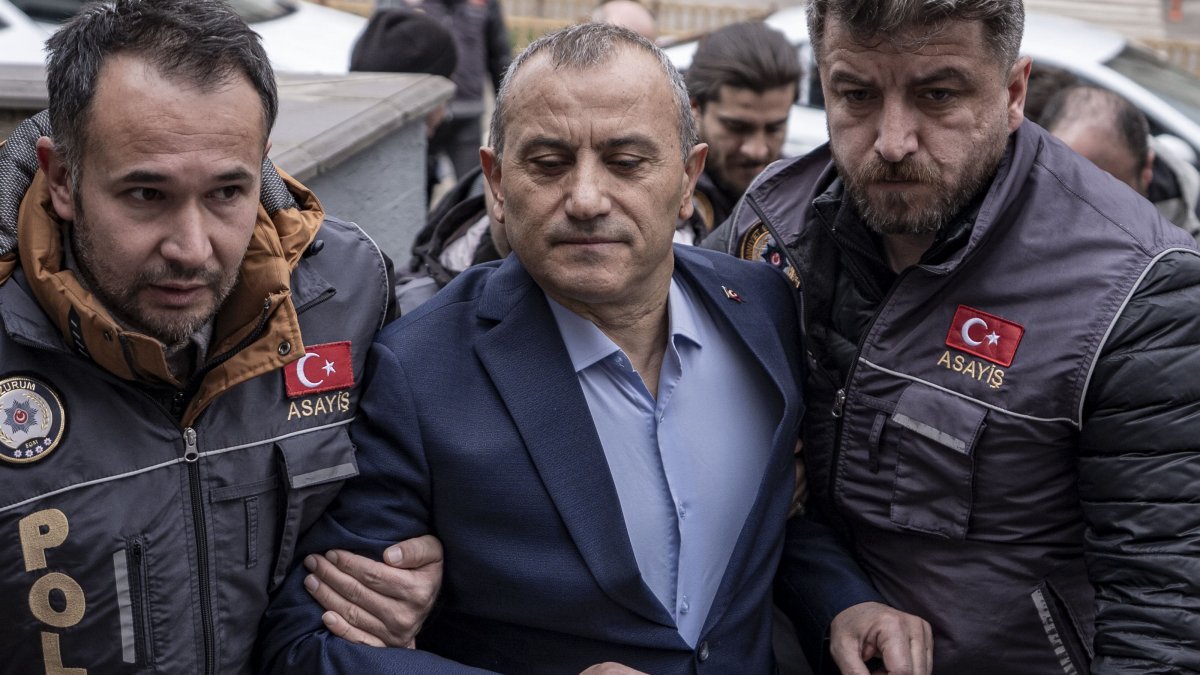
Gürlek’s statements come amid a landmark breakthrough in the case of Gülistan Doku, a 21-year-old university student who went missing in 2020 in the eastern province of Tunceli. Doku was suspected of being murdered, though months of searches for her in the province could not find any trace. After a suspect claimed to be her boyfriend was detained and later released due to lack of evidence, Doku’s family complained about shortcomings in the investigation and long appealed to authorities to find the culprit or culprits in her disappearance. The case took a new turn after a secret eyewitness came forward in 2025, claiming Doku was murdered by Mustafa Türkay Sonel, the son of then-Governor Tuncay Sonel, and his friend Umut Altaş. The witness also claimed that the governor’s guard buried the body. No trace of Doku was found in another search, but a new investigation netted several suspects, including the former governor himself, who was detained a few days after his son’s detention. A police officer, then working for the governor, has also confessed that he was instructed to destroy phone and messaging records of a cellphone line used by Doku. The case has been in the headlines this month, after media reports claimed Sonel used his power as governor to cover up the murder, allegedly enlisting the assistance of police officers and the chief physician of a local hospital.
The minister said on Monday that the judicial process for the former governor was still underway, while media outlets reported that Sonel invoked his right to remain silent when interrogated. “What matters now is finding where (Doku) was buried. Our colleagues work on that,” he said.
Gürlek noted that they would particularly focus on cases that triggered public reaction. “We need a new pair of trained eyes on these cases. We see that there is a high public anticipation after Gülistan’s case, but this does not mean that all unresolved cases remained unresolved due to failures in the investigation or for other reasons. Still, we have the determination to solve all the cases,” he said.
The minister had previously announced that authorities would investigate two other well-known unresolved cases, including the death of Rojin Kabaiş, a university student whose body was found in 2024 on the shores of Lake Van, in the eastern province of Van, where she was attending university. An initial forensics report found DNA traces of two men on the body, raising suspicion that she was murdered and dumped on the coast. Kabaiş’s family has filed a criminal complaint to find the likely culprits. The other case involved Rabia Naz Vatan, an 11-year-old girl who was found injured outside her home in northern Türkiye’s Giresun in 2018. She later succumbed to her injuries. The case was inconclusive as investigators could not determine whether she fell from a height or committed suicide. Vatan’s father has claimed that his daughter was injured when a car ran her over, and the motorist left the body outside their home. Launching his own investigation, the father claimed to find out that nephew of the then mayor of Giresun’s Eynesil ran her over.

