

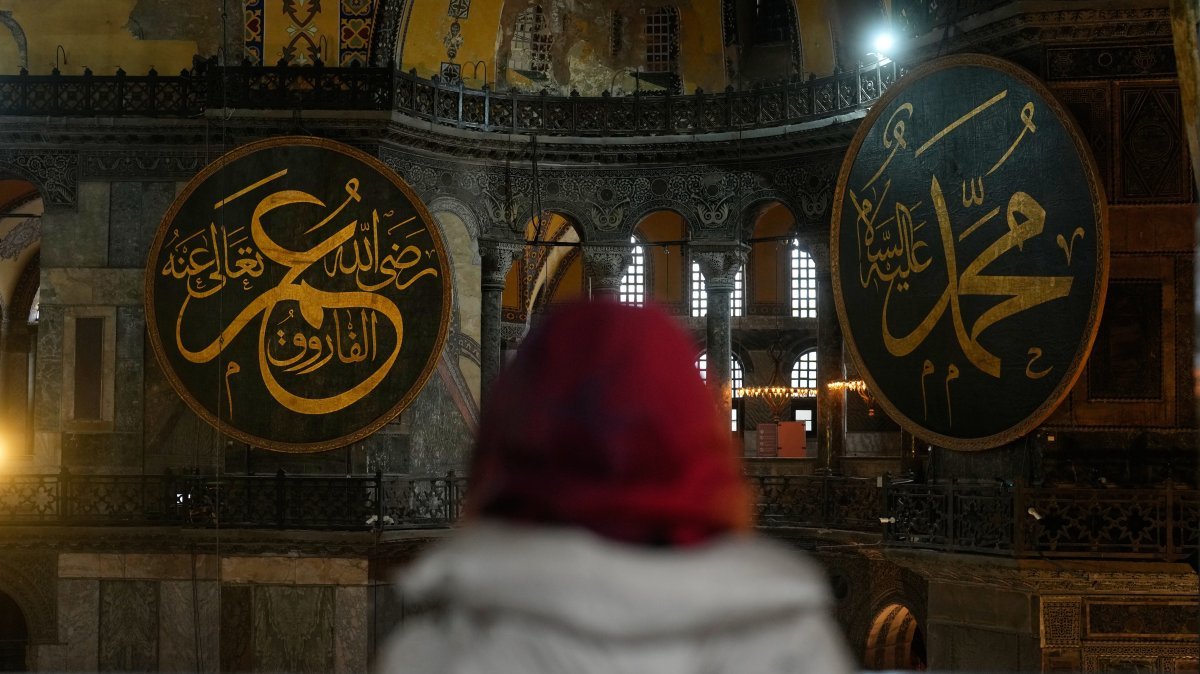
Istanbul police announced on Tuesday that two Greek tourists who unfurled a “Byzantine flag” at the Hagia Sophia Grand Mosque in Istanbul were arrested.
The incident took place on April 9. A report by the broadcaster NTV says tourists, identified as 35-years-old Mazis Michael and 42-years-old Kostantina Mazi, arrived in the iconic mosque which was converted from a Byzantine cathedral after Istanbul’s Ottoman conquest in 1453, with a group of fellow tourists.
Inside, two suspects unfurled a Byzantine flag, taking photos of each other with the flag. When security guards noticed, they intervened and alerted police.
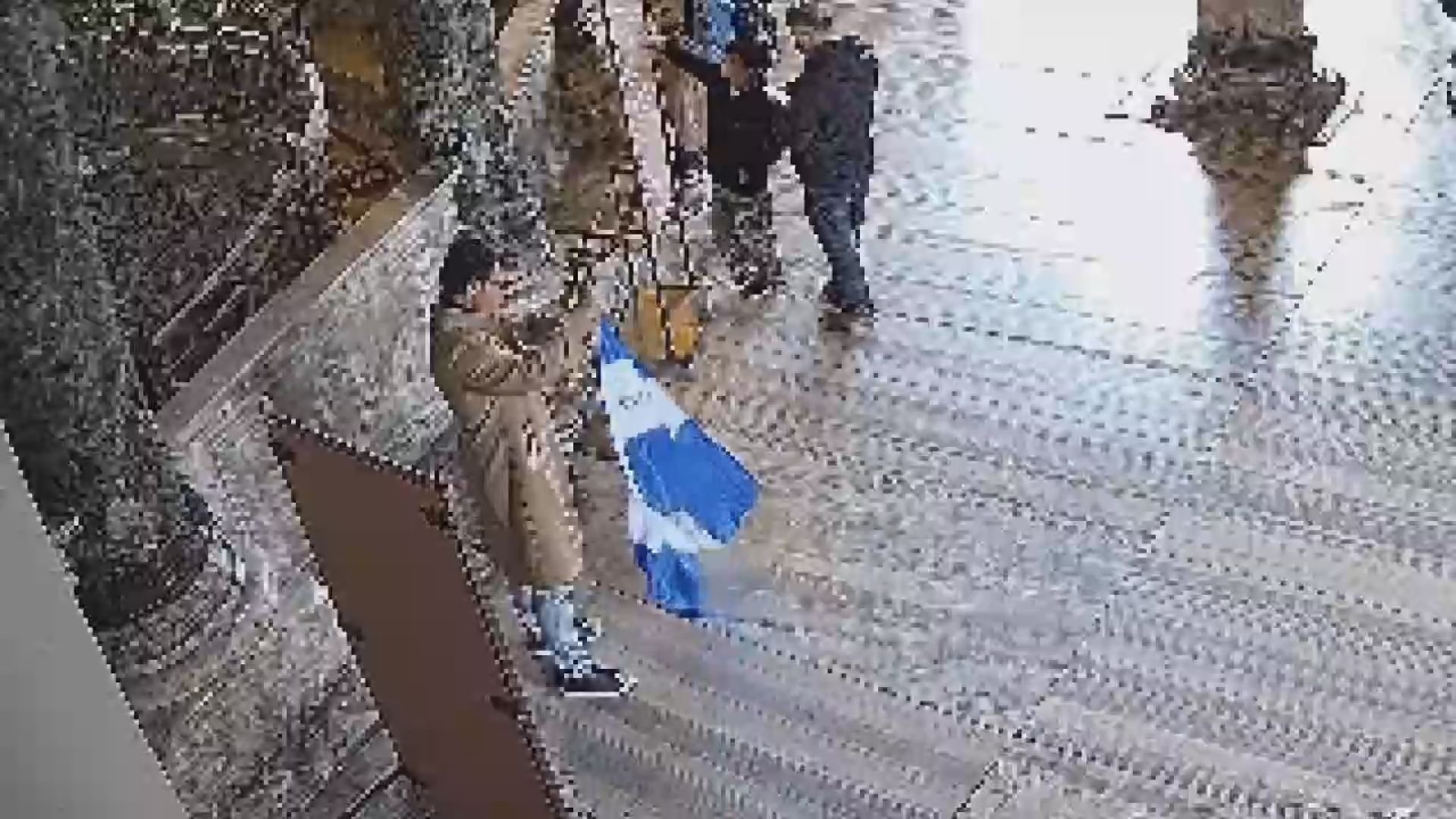
Suspects were subsequently detained at the hotel they were staying in Istanbul’s Fatih district. An Istanbul court ordered their arrest on charges of “inciting public hatred.”
NTV reported that the flag had an inscription translated into Turkish as “Be Orthodox or Die.”
The incident underscores the enduring political and symbolic significance of Hagia Sophia, a structure that has stood at the center of competing historical narratives for centuries. Built in 537 under Byzantine Emperor Justinian I, it served as the main cathedral of the Byzantine Empire and a focal point of Eastern Orthodox Christianity before being converted into a mosque following the Fall of Istanbul. Its reconversion into a mosque in 2020 reignited sensitivities, particularly in Greece.
For many Greeks, Hagia Sophia represents a lost center of Orthodox heritage. Turkish authorities, however, often interpret such displays inside the mosque as deliberate provocation.
The episode also reflects broader tensions between Türkiye and Greece, whose relations have long been strained over territorial, political and cultural disputes. In this context, symbolic acts at contested or sensitive sites can quickly escalate.

