

Istanbul’s structured youth engagement architecture continues to scale through a wide network of Presidency of Religious Affairs (Diyanet) affiliated youth centers, positioning itself as a multidimensional platform for education, social development, and values-based capacity building.
Operating under the umbrella of the Diyanet and coordinated by the Istanbul Provincial Mufti’s Office, these centers are increasingly functioning as integrated development hubs for young people across the city.
Within Istanbul’s 39 districts, a total of 87 Diyanet Youth Centers are currently active, supported by 99 study lounges and 12 Youth Office units. This extensive network is designed to deliver diversified programming that spans arts, sports, academic reinforcement, digital skills, foreign languages, and values education, creating a holistic youth development ecosystem.
According to Istanbul Deputy Mufti Zekeriya Bülbül, the scale of engagement has expanded significantly in recent years. He noted that more than 37,000 activities were conducted across youth centers, Dormitories Institution (KYK) dormitories, and affiliated platforms in 2025 alone, reaching approximately 1.78 million students.
The programming scope includes both domestic and international exposure initiatives aimed at strengthening cultural literacy and historical awareness.
Bülbül highlighted that educational content is supplemented with thematic presentations focusing on Istanbul’s historical identity as a civilizational hub, while broader study excursions extend to regions such as the Balkans and the Middle East.
From an operational standpoint, the system is supported by a workforce of 1,110 personnel deployed across Istanbul’s districts. In addition to internal staff, the centers leverage external expertise by integrating professional trainers from a wide range of disciplines, including sports, adventure training, equestrian archery, martial arts, and applied physical education.
The programming portfolio is further expanded through initiatives that support summer-based education programs. These include structured modules in robotics coding, mathematics, and foreign languages such as English, Spanish and Arabic, reflecting a shift toward blended learning approaches and future-ready skill development.
Seasonal “breathing camps” have been institutionalized to address academic stress and psychosocial well-being, particularly for students preparing for university entrance examinations. These camps include experiential learning such as horse riding, cycling activities, adventure park engagement, and soft skills workshops, combined with structured values education sessions.
The model also includes targeted social support mechanisms. In some cases, individualized assistance is provided to participants needing psychosocial support, including rehabilitation guidance, financial assistance facilitation, and employment integration pathways, within broader social inclusion objectives.
Beyond domestic programming, international study modules are integrated into the system. Structured learning tracks covering regions such as Jerusalem, Bukhara, Maveraünnehir, and the Balkans combine academic seminars with field visits, allowing participants to contextualize historical and cultural narratives through experiential learning.
At the institutional level, the program is positioned as a framework that goes beyond national borders, focusing on globally aware youth development, intercultural literacy, civic responsibility, and values-based education.
At Kısıklı Diyanet Youth Center in Istanbul, programs are structured into the Children’s Academy (ages 7-10) and High School Academy, combining recreational activities with academic support.
The “Wednesday Coffee” program brings university students together with academics and professionals for informal discussions to support critical thinking and intellectual exchange.
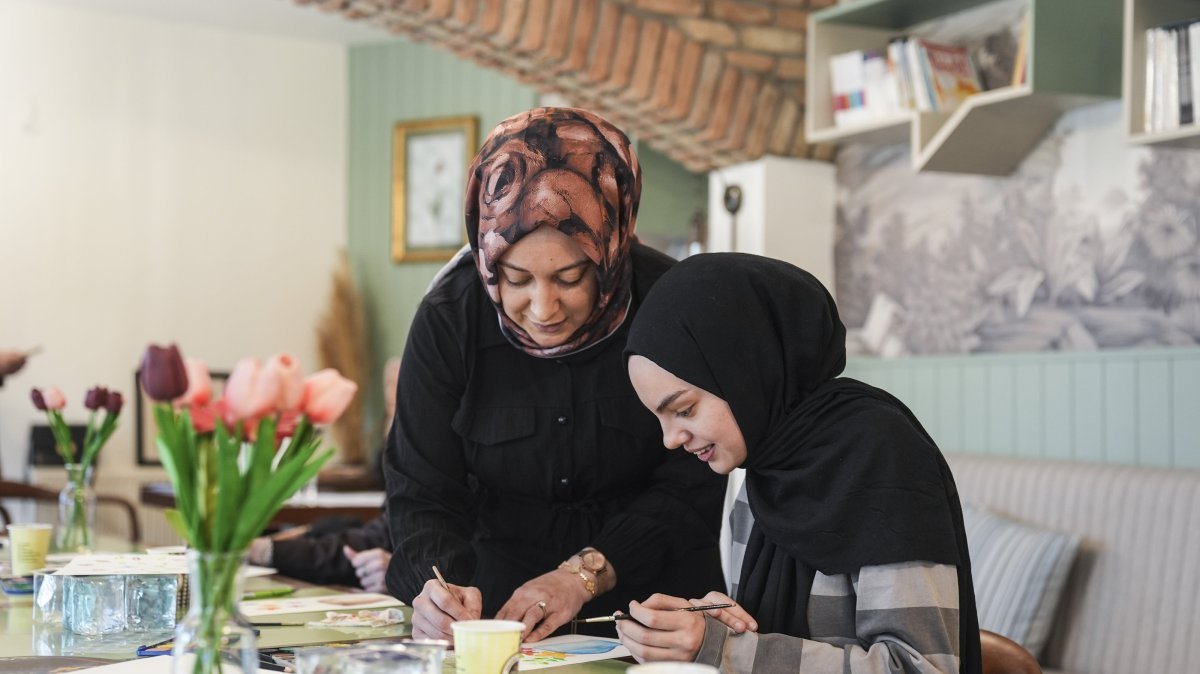
Cultural and artistic programs include traditional arts, literature, psychology, and music workshops, alongside counseling services for emotional and spiritual support.
Social responsibility work includes volunteer visits to eldercare facilities, children’s homes, and assistance to vulnerable families to strengthen civic engagement.
Participants themselves report tangible developmental outcomes, highlighting improvements in academic performance, emotional well-being, and social connectivity. Many describe the centers as safe, structured environments that facilitate both intellectual enrichment and interpersonal growth through collaborative learning and mentorship-based engagement.

