

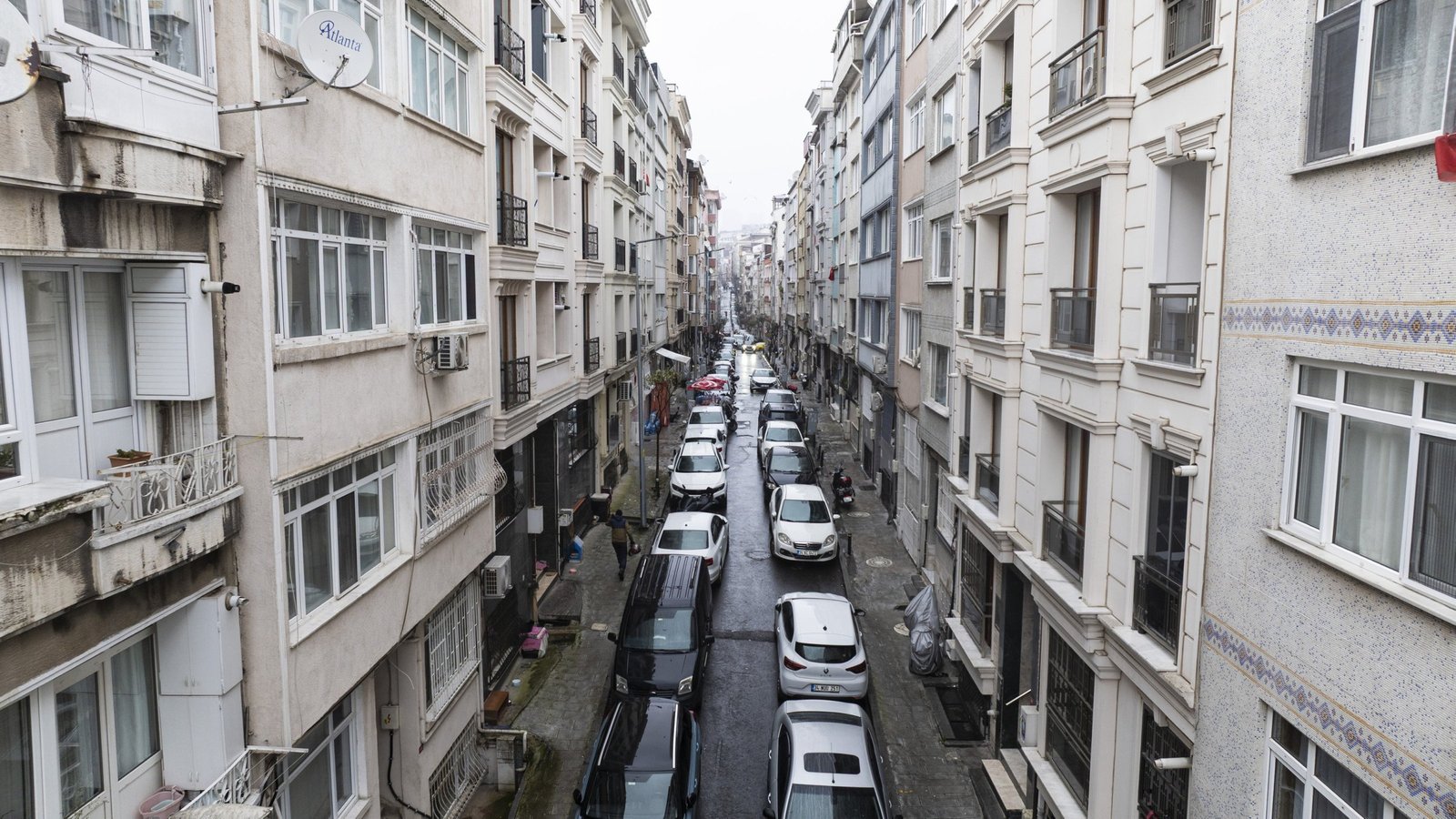
In Istanbul, millions of drivers face daily challenges not only with traffic flow but also with finding parking, leading to congestion and, at times, disputes over limited spaces.
The city was ranked as the world’s most congested city last year, according to the 2025 INRIX Global Traffic Scorecard, which analyzed traffic patterns across more than 900 cities in 36 countries.
On average, drivers spent 118 hours in traffic annually, marking a 12% increase compared to the previous year.
Traffic congestion, affecting the metropolis for most of the day, has become one of the most exhausting aspects of daily life. Drivers who spend long hours on the road often face an additional challenge upon arrival: finding a place to park.
Meanwhile the search for parking frequently turns into a time-consuming process, further compounding delays and frustration across the city.
Footage recorded in multiple districts illustrates drivers circling the streets for extended periods to find parking, while some vehicles are parked in double lines or on sidewalks, blocking building entrances.
This situation negatively impacts both vehicle and pedestrian traffic. In neighborhoods with narrow streets, improperly parked vehicles hinder the access of ambulances, fire trucks and other emergency services.
Disputes over parking can escalate from verbal arguments among drivers to physical confrontations. Moreover, vehicles parked illegally disrupt public transportation schedules. On bus and minibus routes, improper roadside parking can cause long traffic lines.
Major arteries in Istanbul experience daily congestion, worsened by illegal and double parking spilling into residential streets. Commercial streets in neighborhoods such as Tuzla’s Aydıntepe, Üsküdar’s Bosna Boulevard and Şişli’s Kurtuluş see vehicles blocking bus lanes, pedestrian crossings, and creating traffic bottlenecks, safety risks, and disputes among drivers and couriers.
Even where underground parking exists, such as in Fulya, spaces remain insufficient, forcing street parking that obstructs emergency access. Residents in Beyoğlu, Sarıyer, Küçükçekmece, Kağıthane and other districts report blocked sidewalks, pedestrian hazards and economic strain on businesses. Informal solutions, like posting phone numbers on windshields or using vacant lots, partially alleviate congestion but are insufficient.
Historic areas, including Fatih, Sultanahmet, Eminönü, Karaköy, and Beyazıt, face chronic parking shortages exacerbated by narrow streets and tourist traffic. Commercial districts such as Merter and Ümraniye experience double- and triple-row parking, reducing streets to single lanes and complicating traffic flow.
Improper parking also creates serious safety risks. Emergency vehicles, including ambulances and fire trucks, often struggle to reach destinations promptly due to blocked streets. Additionally, public transport services are disrupted, as buses and minibuses encounter obstacles caused by illegal roadside parking.
The parking shortage imposes economic costs, vehicles consume more fuel while searching for parking, increasing individual expenses and contributing to higher air pollution levels.
Istanbul, governed by a municipality led by the Republican People’s Party (CHP), continues to face mounting urban challenges, from transportation and parking shortages to water management and infrastructure pressures, prompting growing calls for more comprehensive and sustainable municipal solutions.

