

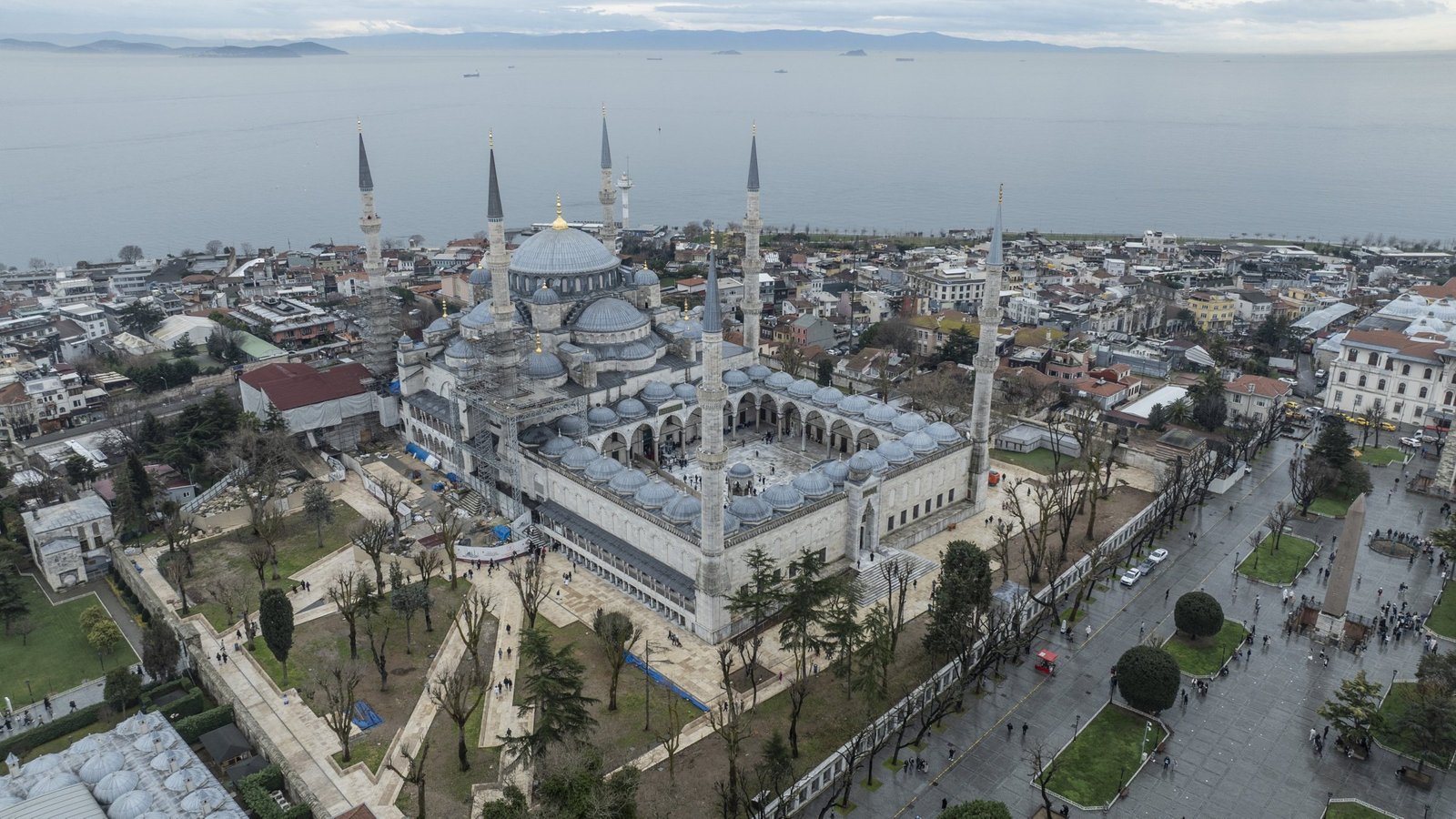
Standing among the most distinguished achievements of Ottoman architecture, the Sultanahmet Mosque has, for more than four centuries, continued to function not only as a place of worship but also as a defining symbol of Istanbul’s historical and cultural identity.
The structure was commissioned by Sultan Ahmed I and designed by chief architect Sedefkar Mehmed Agha. Representing a first in Ottoman architecture with its six minarets, the construction of the mosque began in 1609 and was completed in approximately seven years and five months. Considered one of the most refined works of Turkish-Islamic civilization, the mosque officially opened for worship on June 9, 1617.
Recognized as one of the final monumental structures of the classical architectural period, the mosque is also known internationally as the “Blue Mosque” due to its interior adorned with blue Iznik tiles.
With its expansive courtyard, central dome and semi-domes, the structure stands out both aesthetically and from an engineering standpoint. Its position opposite Hagia Sophia creates a distinctive architectural balance within Istanbul’s skyline.
The complex, comprising a mosque, madrassa, primary school, royal pavilion and arasta (bazaar), stands as a prominent example of the mosque-centered urban planning approach of the Ottoman era.
Through this külliye structure, religious life, education and social interaction were organized around a single civic center.
Today, welcoming millions of local and international visitors annually, the Sultanahmet Mosque continues to maintain its status as one of the most visited historical landmarks in the city.
Academic and art historian Yasin Saygılı discussed the mosque’s historical background, architectural design, interior motifs, the city’s atmosphere during Ramadan and aspects of social life in the Ottoman period.
Saygılı explained that Sultan Ahmed I, who ascended the throne at a young age, commissioned the mosque as a holistic complex incorporating the mosque itself along with its külliye, madrassa, bathhouse and bazaar.
He noted that Sultan Ahmed I is known in Ottoman history as the ruler who abolished the practice of fratricide and introduced the “seniority and merit” succession system following the death of his father, Sultan Mehmed III. Saygılı emphasized that the mosque’s construction was intended to demonstrate the power and prestige of the Ottoman Empire at the time.
Highlighting the choice of location, Saygılı stated that the sultan selected the area now known as Sultanahmet Square, which at the time housed residences of high-ranking Ottoman officials and was historically referred to as the “Hippodrome” or “At Meydanı.”
Describing Sultan Ahmed I as an ambitious ruler with expansive aspirations, Saygılı continued: “For this reason, Sultan Ahmed I consulted with Sedefkar Mehmed Agha and ordered the construction of what would become the largest mosque built up to that point, intended as a new adornment for Istanbul. Until then, the only structure with six minarets was the Grand Mosque in Mecca. Consequently, to preserve its unique status, the sultan ordered the addition of a seventh minaret there. Following this decision, the Sultanahmet Mosque became the first Ottoman mosque constructed with six minarets.”
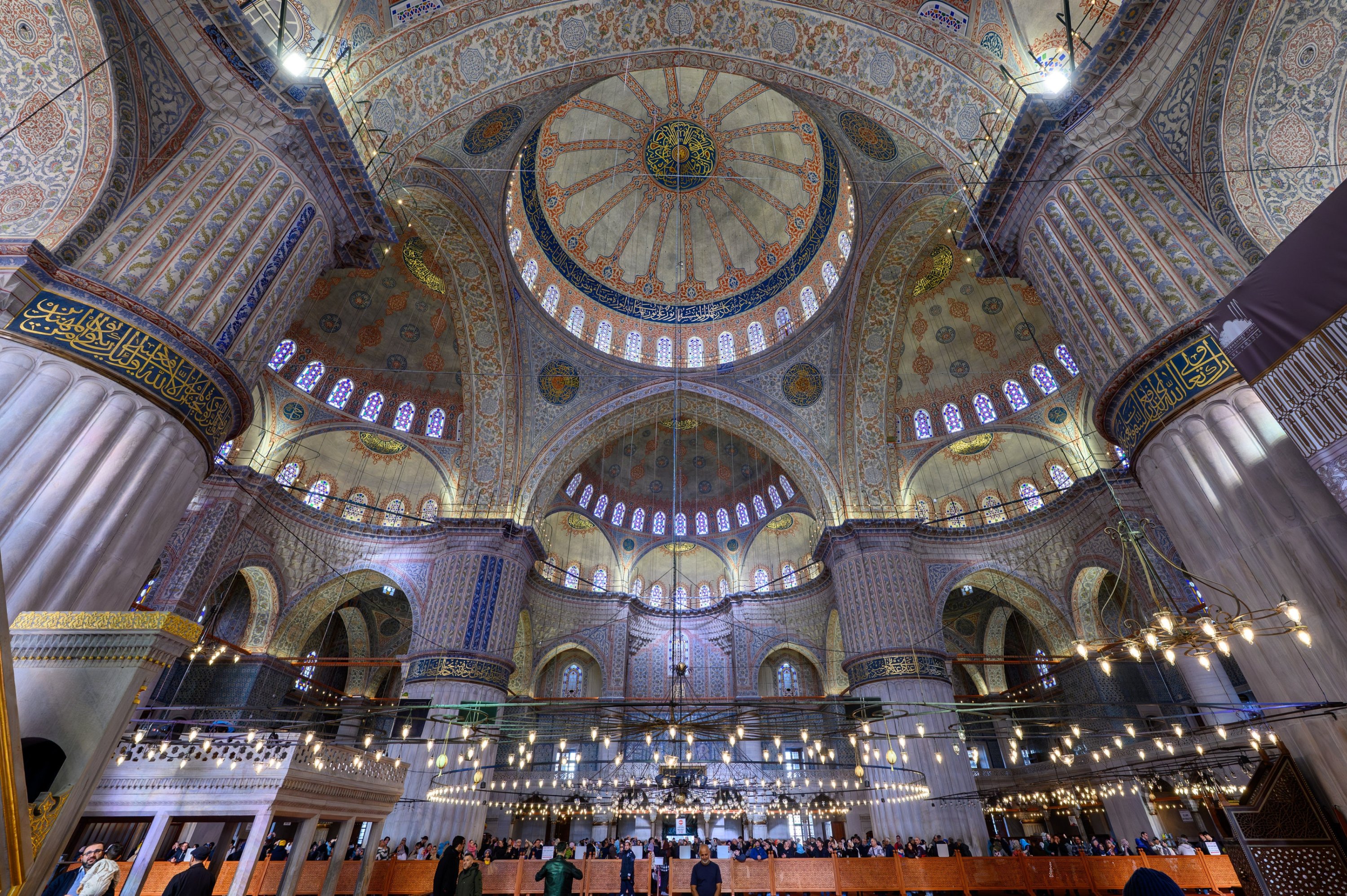
Saygılı noted the extensive tile decoration within the mosque, stating that approximately 20,000 tiles and nearly 50 tulip motifs are present throughout the interior.
He added that the dense use of blue tiles is the reason foreign visitors commonly refer to the structure as the “Blue Mosque,” explaining, “Unlike the Süleymaniye and Şehzade mosques, this structure marks the transition into what we call the post-classical period. The interior of the Sultanahmet Mosque, designed by Sedefkar Mehmed Agha, is entirely covered with tile ornamentation.”
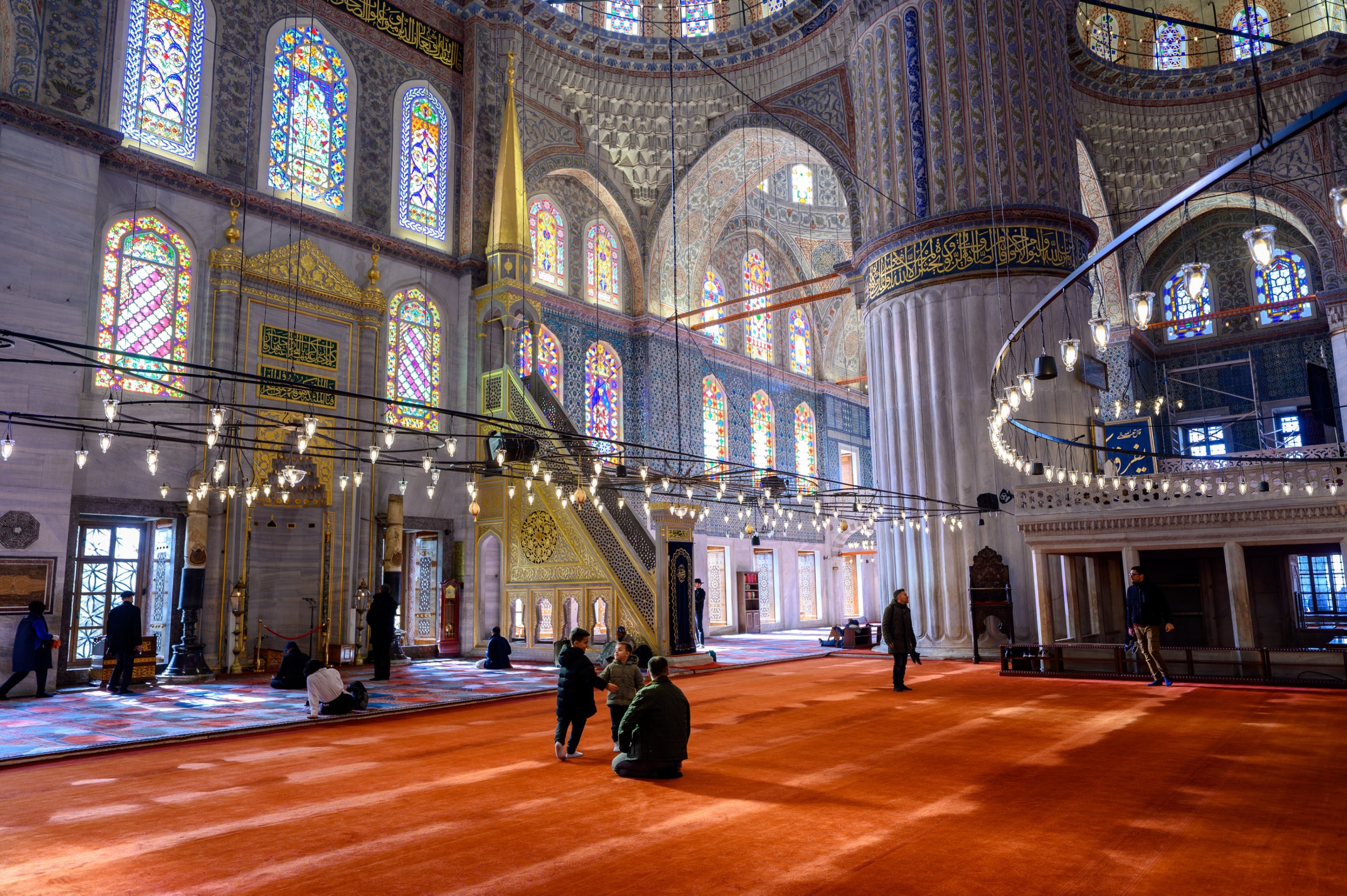
According to Saygılı, the mosque’s interior showcases a wide spectrum of colors and motifs produced during the Ottoman period, while its dome rests on four main piers, consistent with classical Ottoman mosque architecture.
He also pointed out that while some components of the külliye did not survive to the present day, the bazaar remains intact behind the mosque. He explained that imperial endowments were established to fund the mosque’s upkeep, ensuring its continuity through revenues generated by these foundations.
Saygılı further noted that Sultan Ahmed I personally devoted significant effort to the mosque’s construction, adding: “Historical sources indicate that the sultan came here every morning after the dawn prayer and worked on the construction site like a laborer until the noon call to prayer, holding a pickaxe in his hand. That very pickaxe can still be seen today in the Third Ahmed Library located in the Enderun Courtyard of Topkapı Palace.”
Saygılı stated that, like all major imperial mosques, the Sultanahmet Mosque has traditionally attracted heightened public attention during the month of Ramadan.
He explained that mosque courtyards served as an integral part of Ottoman social life during Ramadan, hosting both religious observance and communal gatherings: “People would come together not only for worship but also for social interaction, similar to how public squares function today. Practices such as eating roasted chestnuts or corn, conversing, and visiting major mosques were already established traditions at the time.”
Saygılı added that swings were set up in the adjacent square during the Ottoman period and continued: “Just as today’s public spaces feature seasonal treats like chestnuts and boza, Ottoman-era families gathered here to socialize, spend time together, observe their surroundings and fill the mosque. There is a saying among old Istanbul residents: ‘Istanbul sleeps at night for 11 months of the year, but during Ramadan, it remains awake from the evening prayer until dawn.’”
He added, “The Sultanahmet Mosque, illuminated with its mahyas and oil lamps, would be filled with families visiting throughout the night. Historical accounts and travel records confirm the presence of small stalls selling sweets to children, making the mosque and its square a focal point for families coming from all corners of the city.”

