

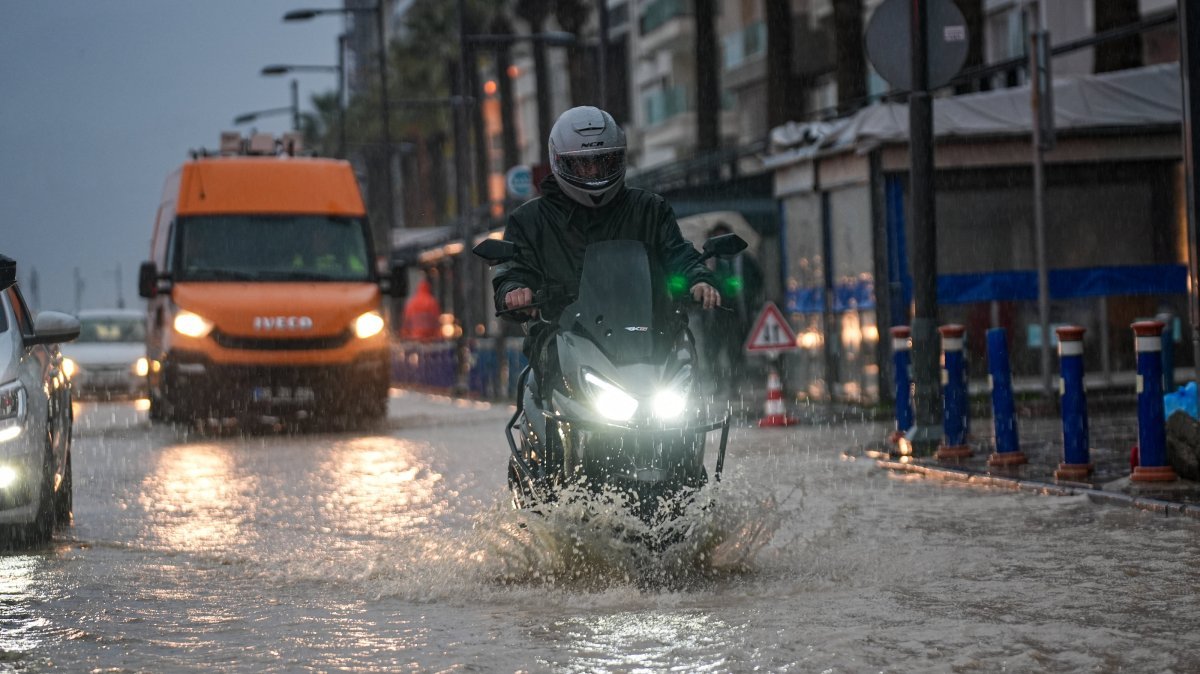
A Turkish meteorologist has developed an early warning system that can detect sudden-onset weather hazards up to 60 hours before they occur, a breakthrough that could strengthen disaster preparedness and reduce economic losses linked to extreme weather.
Professor Hasan Tatlı, a meteorological engineer and faculty member at Çanakkale Onsekiz Mart University, said the system is designed to identify rapidly developing events such as heat waves, cold spells, convective windstorms and droughts well in advance.
“The model is capable of generating early warning signals between three and 60 hours before sudden meteorological events occur,” Tatlı said. “This provides a strategic time window for preparedness and risk reduction.”
The research, published in the Quarterly Journal of the Royal Meteorological Society, introduces a four-dimensional nonlinear dynamic model developed in response to the limitations of conventional forecasting tools, which often struggle to detect abrupt weather events.
Tatlı’s Integrated Early Warning System model combines weather forecasting with dynamic systems theory to produce a single, easy-to-interpret risk index. The index is based on four core components: atmospheric sensitivity, recovery capacity, threat propagation potential and behavioral response tendencies.
By converting complex atmospheric data into a numerical risk value between zero and one, the system aims to make early warnings more actionable for authorities, emergency planners and critical infrastructure operators.
Tatlı said the model could play a key role in agriculture, where sudden drought, frost and heavy rainfall can disrupt production and threaten food security. He added that urban areas could also benefit, as heat waves and flooding increasingly strain energy networks and transportation systems.
Extreme weather events can also trigger cascading effects across regions, Tatlı said, citing floods or wildfires that spread beyond their initial location. The system is designed to issue alerts before such compound hazards develop.
He noted that climate change, driven largely by human activity, has increased the frequency and intensity of extreme events such as heavy rainfall, hail and storms. While natural hazards are inevitable, he said, their transformation into disasters is not.
“Preparedness is the decisive factor,” Tatlı said. “Early warning systems are among the most effective tools for preventing natural events from escalating into large-scale disasters.”

