

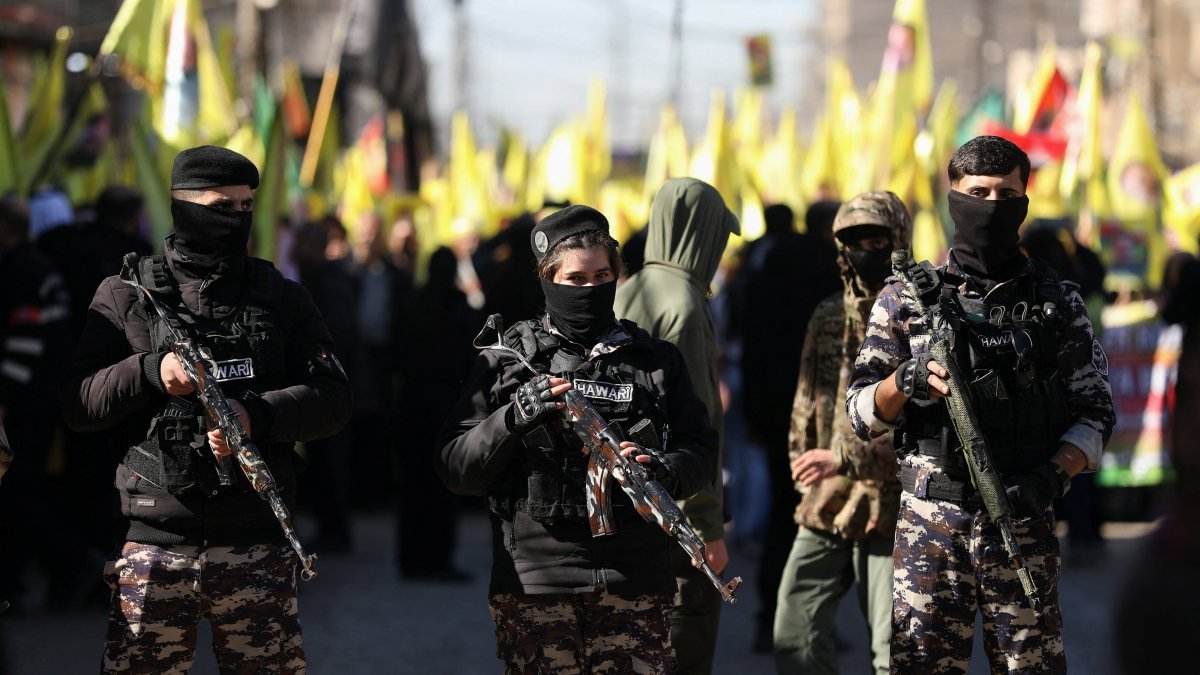
A group of members of the U.S.-backed terrorist group YPG, which relented to a deal with Damascus in January, will undergo training at a military college in the Syrian capital as part of the agreement. The news website Rudaw reported on Monday that 28 members of the group would leave for Damascus within three days. It is the first time that this section of the comprehensive agreement will be implemented.
The post-Baathist administration in Damascus has moved against the YPG when the latter reneged on an earlier deal for integration into the Syrian army. On Jan. 16, the Syrian army launched an offensive against YPG-controlled areas in northeastern Syria. After days of the offensive, the YPG consented to sign a new deal with Damascus on integrating both “administrative” and “military” structures of the YPG to post-Assad Syria. The terrorist group agreed that Syrian security forces would be deployed in Hassakeh and Qamishli, two key areas occupied by the YPG.
The deal also stipulated a faster integration of armed members of the YPG into Syrian security forces and the creation of a division consisting of three brigades of the YPG. A source speaking to Rudaw said 18 “officers” will join the training from Jazira and 10 others were deployed in Ayn al-Arab, also known as Kobani. After completing their training, which will continue for one year, they are expected to command brigades as agreed upon in the January agreement. More YPG members will be trained for integration, Rudaw reported.
The YPG, the Syrian wing of the terrorist group PKK, neither complied with Türkiye’s terror-free initiative for disarmament of the PKK, nor with a March 2025 deal for integration with the Syrian security forces. Türkiye is a major supporter of post-Assad Syria and views the YPG as a threat to its own national security. Ankara has hinted that it may resort to a military option in Syria as it did in the past to thwart the YPG’s ambitions, but repeatedly called for dialogue to resolve the dispute between the YPG and Damascus.
The views and opinions expressed in this article are solely those of the author. They do not necessarily reflect the editorial stance, values or position of Daily Sabah. The newspaper provides space for diverse perspectives as part of its commitment to open and informed public discussion.

