

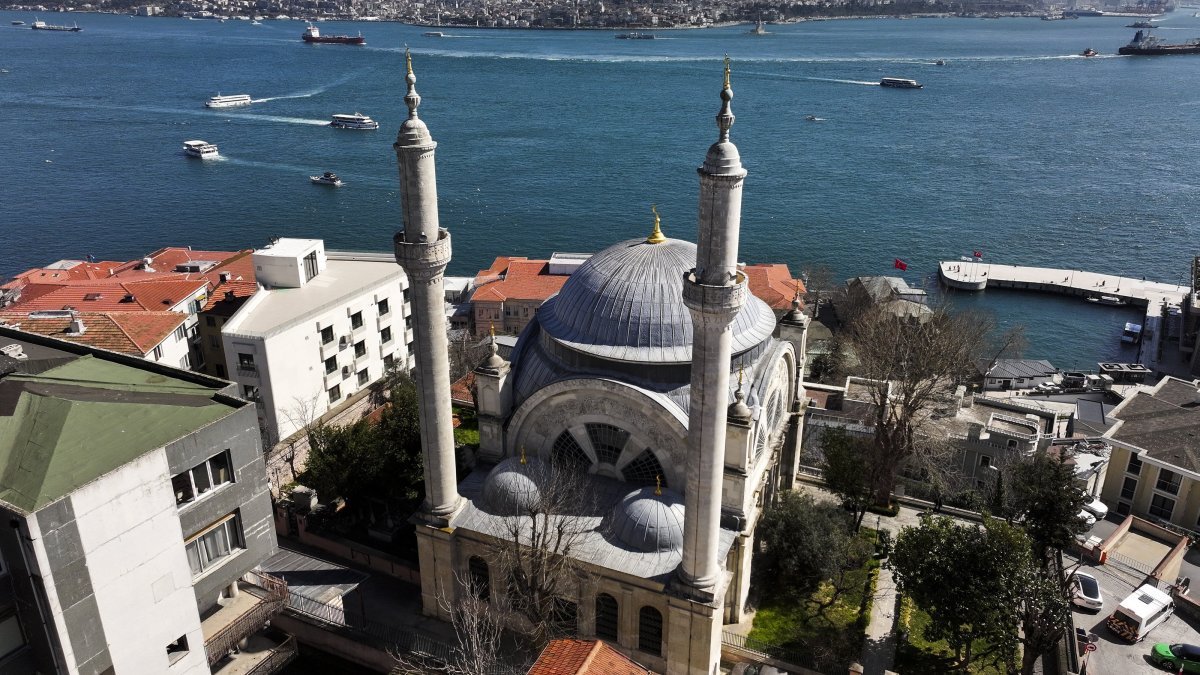
Located in Istanbul’s Beyoğlu district with commanding views over both the Marmara Sea and the Bosporus, Cihangir Mosque stands out as a historically significant place of worship, preserved to the present day through its 19th-century reconstruction.
Commissioned in honor of Şehzade Cihangir, the son of Sultan Süleyman the Magnificent, the mosque was originally constructed between 1559 and 1560 as a memorial to the young prince. Over the centuries, the structure sustained considerable damage due to repeated fires and earthquakes, necessitating multiple restorations.
In 1890, during the reign of Sultan Abdülhamid II, the mosque was rebuilt, giving it its current form. Architecturally, it features a square plan with a single dome, a three-section portico at the entrance, and minarets rising at two corners, making it visually distinctive.
The Cihangir Mosque, which also lends its name to the surrounding neighborhood, occupies an elevated position that provides a wide panoramic view, securing a prominent place in Istanbul’s skyline.
With its architectural characteristics and historical background, the mosque is regarded as one of Istanbul’s important religious structures and a significant example of cultural heritage preserved from the Ottoman era to the present day.
Dr. Resul Yelen, a faculty member in the Department of Turkish and Islamic Art at Istanbul Medeniyet University, stated in an interview that the mosque is situated on a hill along the Fındıklı slope, facing the sea.
Yelen explained that there are notable differences between the original structure and the current building, noting: “The first mosque was commissioned for Şehzade Cihangir, the son of Sultan Süleyman and Hürrem Sultan. Naturally, it was a work by Mimar Sinan. Our knowledge of the original structure largely comes from Evliya Çelebi. According to his accounts, the mosque had a square plan and a single dome, and it included a primary school.”
“However, throughout history, the building suffered five fires and underwent multiple reconstructions. The present structure dates back to 1890, during the reign of Abdülhamid II. While it still maintains a square plan with a single dome, it reflects the architectural characteristics of the late Ottoman or Westernization period,” he added.
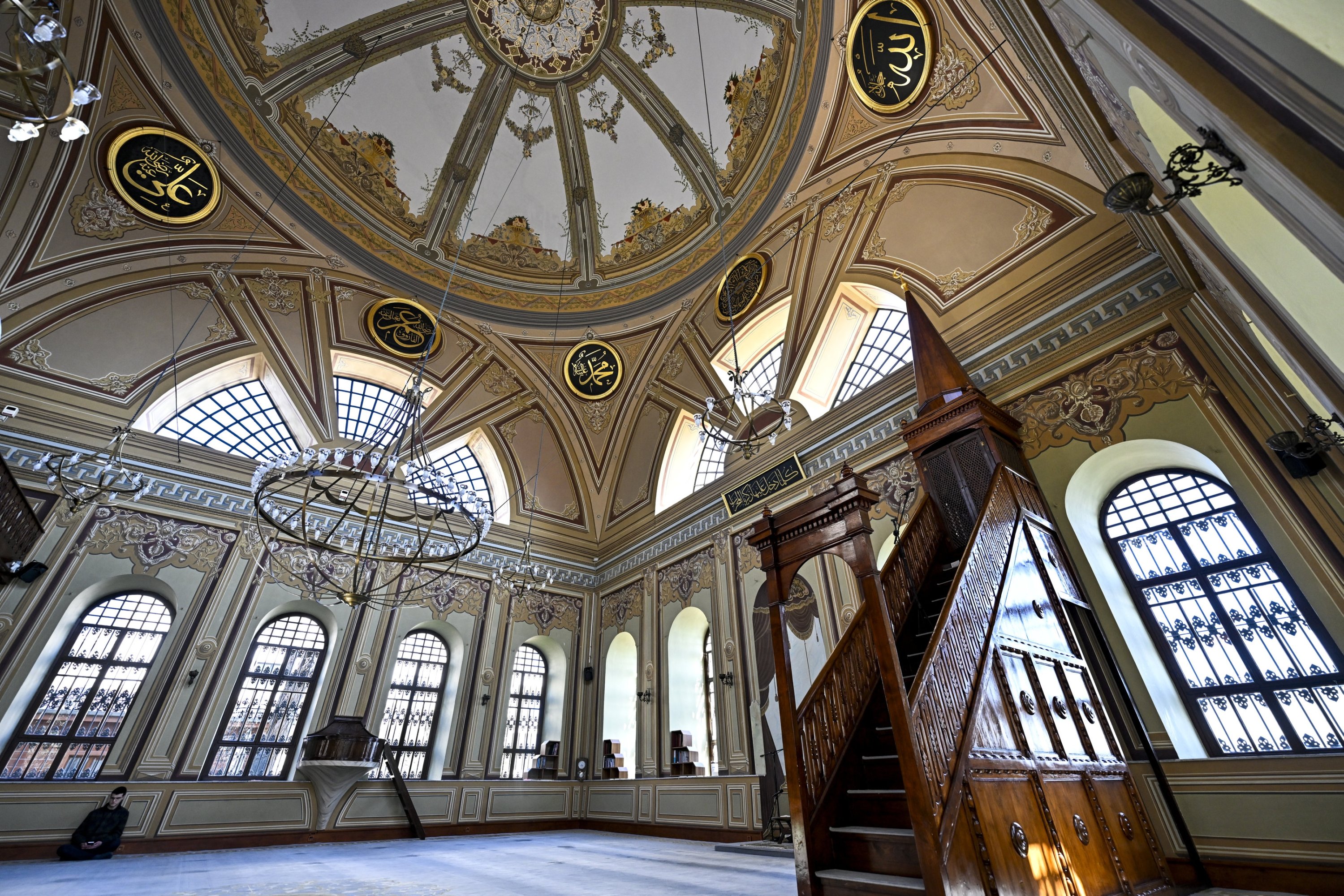
He added that the dome is supported by high arches resting on the corners, allowing for numerous windows that brighten the interior. The lower windows feature rounded arches, while those within the higher arches are designed in a fan shape.
Yelen also pointed out that the exteriors are enlivened with windows and recessed columns, while the S- and C-shaped vegetal motifs above the arches reflect the decorative style of the period.
Highlighting the mosque’s modest decorative approach, Yelen said: “The mosque once housed around 39 calligraphic panels created by renowned calligraphers. However, these have been moved to museums today to prevent theft. Inside, there are floral motifs emerging from vases, along with S- and C-shaped leaves and acanthus designs.”
“The dome has a segmented interior and is adorned with vegetal decorations. The mihrab niche features a curtain motif, depicted as if drawn open on both sides with tassels. Additionally, the niche is painted in a sky-blue color, symbolically representing both its view of the Bosphorus and its orientation toward the heavens,” he said.
Recalling that Şehzade Cihangir died at the age of 22, Yelen concluded: “When we consider the mosque’s location, it simultaneously overlooks the Bosporus, the Marmara Sea, Üsküdar and Topkapı Palace. It also faces the historic peninsula, indicating that a very special site was chosen for Şehzade Cihangir. Although it is a relatively small structure, its position on a hill and elevated platform makes it highly striking from a visual perspective.”

