

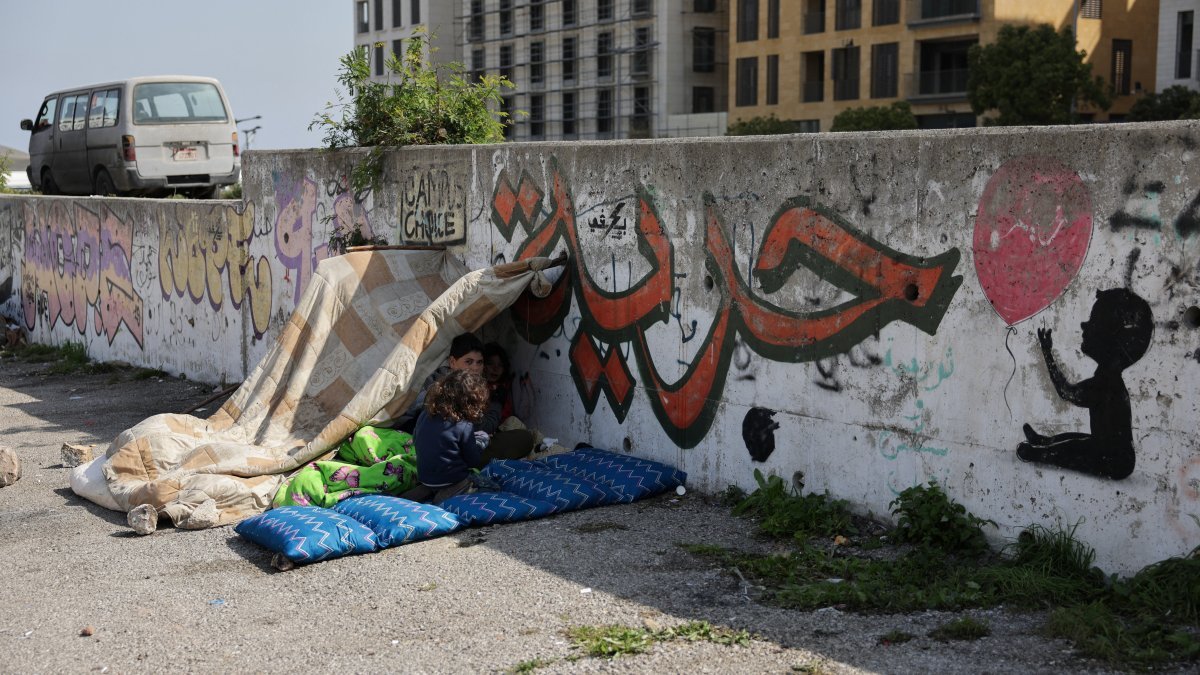
Israeli strikes have killed more than 100 children in Lebanon since the latest escalation between Israel and Hezbollah began, Lebanon’s Health Ministry said Friday, as the overall death toll rose to 773 amid growing concern over civilian casualties.
It says a total of 773 people have been killed during the latest conflict. Sixty-two women are among those killed, and over 1,900 people have been wounded, according to the ministry.
The U.N.’s children’s agency UNICEF also said the situation for millions of children in Lebanon is catastrophic.
“Children must be protected under all circumstances,” emphasized Christian Schneider, executive director of UNICEF Germany, in a report.
Earlier, the Norwegian Refugee Council (NRC) said that Lebanon is nearing a breaking point as mass displacement accelerates, with humanitarian groups warning that the scale of the crisis is growing by the hour.
At least 816,000 people – around 14% of the population – have been displaced in the first 10 days of the escalation, according to official figures cited by NRC.
The number is expected to rise further as Israel continues issuing evacuation warnings and carrying out airstrikes across multiple areas of the country.
“The scale of destruction and displacement is increasing with every passing hour,” said Maureen Philippon, the NRC’s country director in Lebanon.
She said families in shelters are experiencing repeated trauma, with many reliving cycles of bombing, loss and displacement similar to those they endured during previous rounds of fighting.
Israel’s evacuation orders now cover about 1,470 square kilometers, or roughly 14% of Lebanon’s territory, including parts of southern Lebanon, Beirut’s southern suburbs and the Bekaa Valley.
Additional warnings issued recently have expanded the number of villages under threat, prompting further movement of civilians.
Humanitarian organizations say conditions in shelters are deteriorating as the number of displaced grows.
More than 122,000 people are currently staying in collective shelters, many of them overcrowded. In one school hosting around 1,200 people, an average of 15 people share each classroom, while about 23 people rely on a single toilet.
Water supplies are limited and many shelters lack showers and cooking facilities.
The violence has disrupted the education of around 1 million children.
Lebanon was already struggling with a severe economic crisis and weakened public services, leaving humanitarian agencies warning that the country has limited capacity to absorb a rapidly expanding displacement crisis.

