

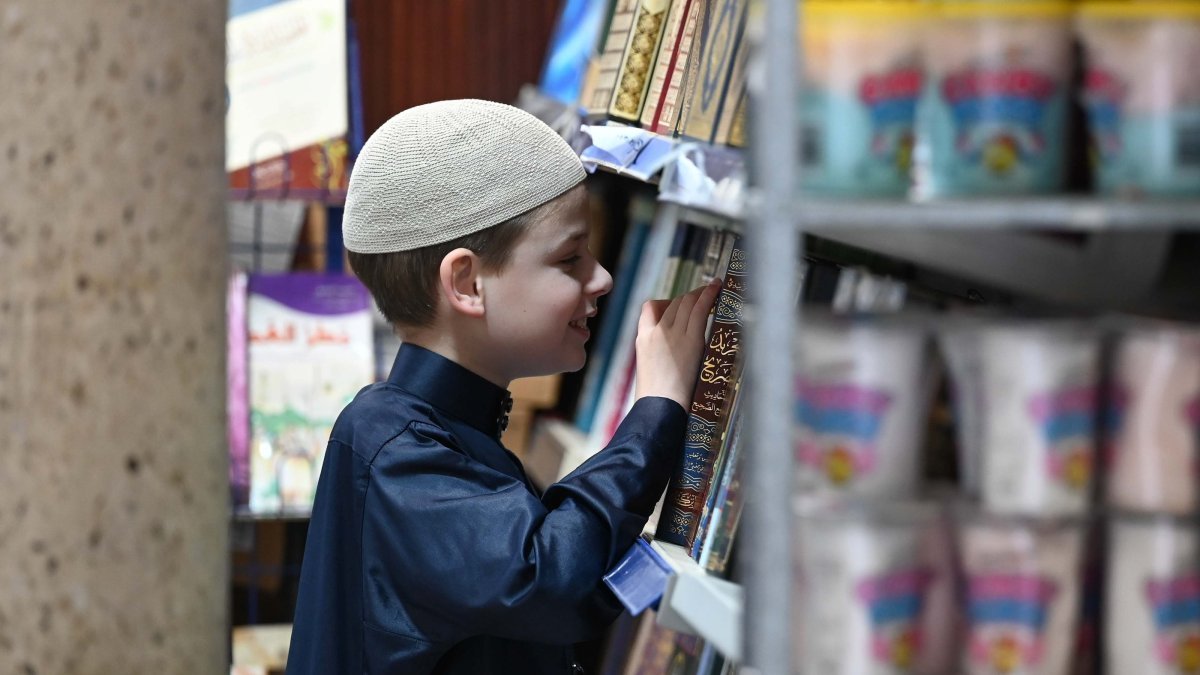
An anti-Muslim hate incident carried out by a far-right extremist at a mosque in the English city of Peterborough has evolved into a nationwide campaign of solidarity and goodwill, led by a 12-year-old boy with autism named Joshua and his father, Dan Harris.
What began as an act of intimidation has since been reframed into a sustained initiative centered on community engagement and empathy. The father and son have visited more than 60 mosques across the U.K., meeting congregations, sharing conversations and distributing homemade cakes. They now say their next objective is to extend the initiative beyond the U.K., with plans to visit mosques in Türkiye.
The incident dates back to October 2025, when far-right extremist Alexander Hooper entered a mosque in Peterborough and sat beside worshippers performing ablution, making derogatory remarks about Islam and Muslims. Members of the congregation alerted police, and officers were dispatched to the scene. During attempts to remove Hooper from the mosque, a scuffle broke out between the 57-year-old man and a female police officer. He was eventually detained with assistance from worshippers.
British media referred to the episode as the “Alma Road Mosque incident,” recording it as part of a wider pattern of far-right hate attacks reported across the country.
In the aftermath, Harris, who lives in Peterborough, decided to visit the mosque with his son to demonstrate support and convey a simple message, “You are not alone.”
“The story began in the most unexpected way. We simply wanted to share a message of solidarity,” Harris said.
Describing his son, Harris added, “This little boy, a 12-year-old nonverbal child known globally as ‘Joshi Man,’ is an incredible baker. We made some cakes together, shared a video, and it unexpectedly went viral worldwide.”
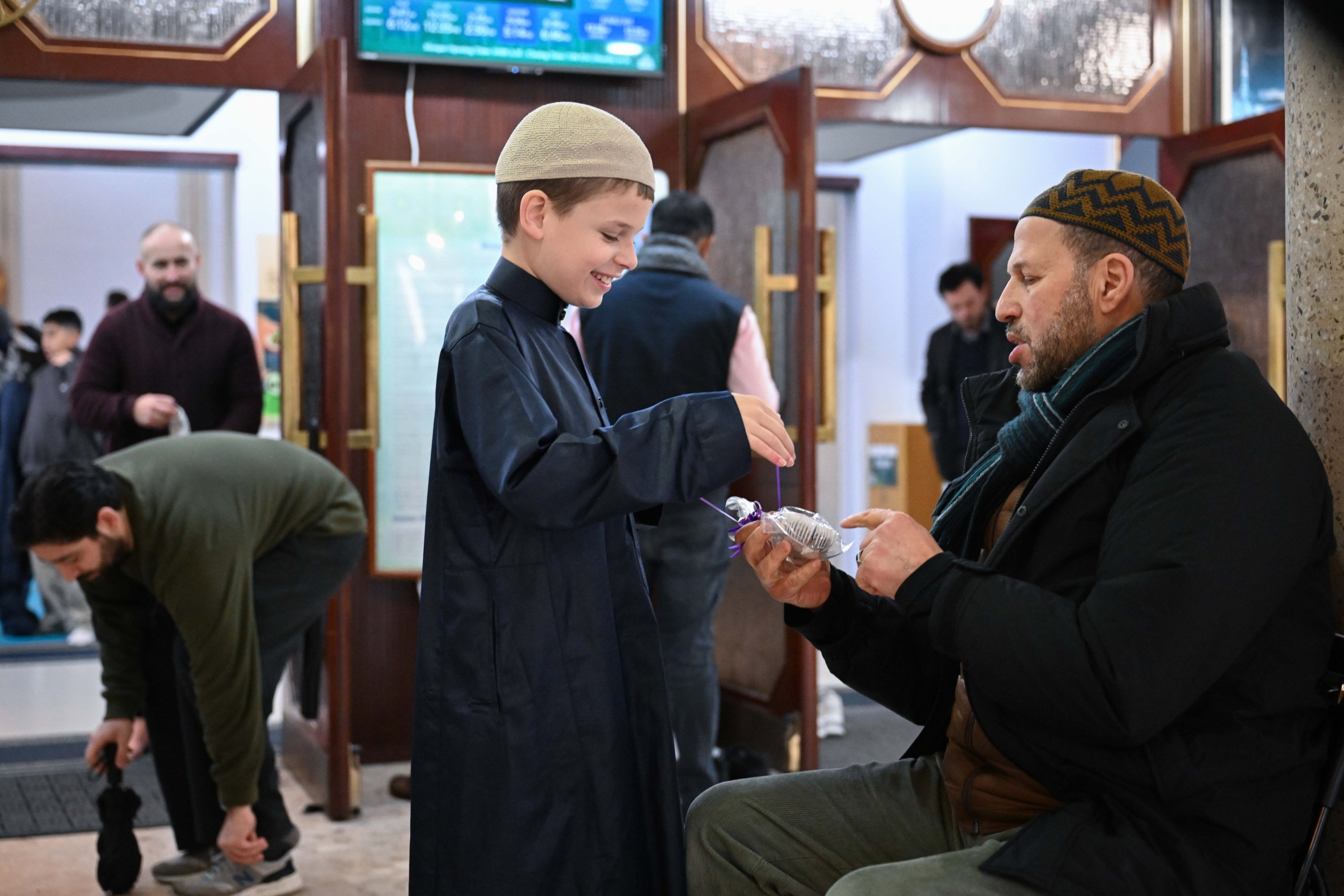
What started as a single visit quickly developed into a nationwide campaign under the slogan “Don’t hate, bake,” particularly after the family began receiving threats and insults from far-right circles. Despite this, they continued their outreach, visiting more than 60 mosques across England, often wearing traditional caps and kandura robes, praying alongside congregations and distributing cakes prepared by Joshua at home.
Joshua, who communicates by pointing to letters on an alphabet tattooed on his father’s arm, is described as having found a sense of calm and social connection in the peaceful atmosphere of mosques.
Harris said the public reaction to their first visit led him to reassess broader social dynamics.
“As a privileged white, middle-class man living in a comfortable area of Peterborough, England, I began to reflect. If this was the reaction directed at me, what must others in the U.K. be experiencing?” he said.
“That realization opened our eyes to the scale of far-right propaganda and the significant level of Islamophobia present in the country,” he added. “What we also discovered was that people willing to stand up against it often become targets themselves.”
Harris said the family received anonymous letters, death threats and insults, some of them directed at Joshua.
“However, every time we receive a threat, it strengthens our resolve. It pushes us to go further and reach more places,” he said.
Their journey recently reached what Harris described as a meaningful milestone after receiving an invitation to Medina.
“It was a profoundly moving experience, and we felt extremely fortunate to be there. The hospitality we encountered was overwhelming, from people in the streets to those we met inside the mosque. They could not have been more generous,” he said.
“We would love to visit Türkiye as well. Some of the most beautiful mosques in the world are there. Although we have only seen photographs online, I am certain they cannot fully capture their majesty, peace, and grandeur. I believe Joshi would deeply appreciate their atmosphere,” he said.
Reflecting on the broader impact of the campaign, Harris highlighted the personal transformation it has brought.
“Perhaps the most significant change we have experienced is the feeling that Joshi now has hundreds of thousands, maybe even millions of ‘aunties and uncles’ around the world. People who genuinely care about him. That sense of global compassion brings us immense comfort,” he said.
“We have received invitations from many countries, and we would love to visit all those places where we are welcomed as friends. The hospitality we have experienced has been unparalleled.”
Meanwhile, Ahmad Al-Dubayan, director general of the London Central Mosque and Islamic Cultural Centre, said they are always pleased to host children like Joshua. He noted that around 9,000 students from British schools visit the mosque each year for educational trips, the majority of whom are not Muslim.
He underlined the mosque’s contributions to British society through humanitarian assistance, food aid, and educational activities.
“I believe one of the core tenets of Islam is the religious imperative to care for strangers and neighbors. Mosques are spiritual spaces, places where people come to worship Allah and focus on their inner peace,” he said.
“And I think that is where children like Joshi find comfort. When they enter such spaces, they encounter calmness, acceptance and peace.”

