

Saudi Arabia is revising its ambitious Red Sea tourism strategy, scaling back plans to build 81 luxury resorts by 2030 as the kingdom reassesses the scope and pace of its multi-billion-dollar diversification projects, according to sources familiar with the matter.
Stubbornly low oil prices and patchy demand have forced a rethink of the flamboyant “giga-projects” – centrepieces of Crown Prince Mohammed bin Salman’s Vision 2030 program to diversify Saudi Arabia’s economy.
Red Sea Global (RSG) denied plans to downsize, saying the project would continue after the initial phase of 27 resorts is completed this year.
But sources with knowledge of the plans said construction would halt at the end of 2026, costing dozens of jobs at RSG and hundreds at contracting firms.
The sources spoke on condition of anonymity due to the sensitivity of the matter.
“A decision was taken to stop work on Phase Two of the Red Sea projects,” a senior RSG source told AFP.
“Current operating costs exceed revenues in a way that has become unsustainable,” another source at the company added.
Seven sources at RSG, other giga-projects and related companies and consultancies said the Red Sea construction would be put on pause.
However, RSG insisted that it was pressing on with phase two of construction, including on the residential development of Laheq Island.
“As with any large-scale, long-term destination, Phase Two is being delivered through a sequenced approach,” RSG said in a statement to AFP.
“Several projects are currently in design development, approvals, and commercial structuring, which is exactly where they should be at this stage.”
Government officials acknowledge a pullback in the sprawling giga-projects after Saudi Arabia also took on board the large-scale infrastructure commitments of Expo 2030 in Riyadh and the 2034 World Cup.
“Some (giga-projects) will be scaled down. Some will be delayed,” Finance Minister Mohammed al-Jadaan told AFP last month in Davos.
Low oil prices are also impacting Saudi budgets. Profits have fallen for 11 straight quarters at Saudi Aramco, the world’s top oil exporter and the country’s main earner.
“The consensus is that it’s impossible to work on all these projects at the same time,” a source at a company backed by the country’s wealth fund told AFP.
“It was believed that the Red Sea project would attract more capital and generate huge returns, and that it would eventually become financially sustainable,” another source working with a government project added.
“But this never happened.”
The Red Sea developments include Amaala, envisaged to stretch along 68 kilometres (42 miles) of coast and cover 4,155 square kilometres (2,582 square miles), with 30 resorts and a yacht club all powered by renewable energy.
Further south, the Red Sea Project has an international airport and plans for 50 resorts, some of them on three islands.
Just north of the two sites lies another giga-project: Neom, the futuristic new city whose ambitious design is reported to have hit major problems.
The downscaling could deal a blow to Saudi hopes of transforming its Red Sea coast into a top destination for wealthy tourists, competing with the likes of the Maldives.
RSG sources said dozens of staff will lose their jobs when work stops at year’s end. Dozens more are being transferred to the Diriyah and Qiddiya giga-projects in Riyadh, according to sources at those projects.
A senior employee at a project management company affiliated with the Public Investment Fund, which backs the giga-projects, said the Saudi sovereign wealth fund is “re-evaluating the whole Red Sea project.”
“No more construction is approved. They are holding work on Phase Two and treating Phase One as ‘proof of concept’,” the source said.
RSG did not reveal occupancy rates at the 10 resorts completed so far. However, one consultant said they were “mostly sitting empty”.
“The lack of alcohol played a role,m but it wasn’t the main factor,” the consultant said.
“High pricing and the enormous scale of the projects was a problem. They massively overestimated how many people would pay these prices.”
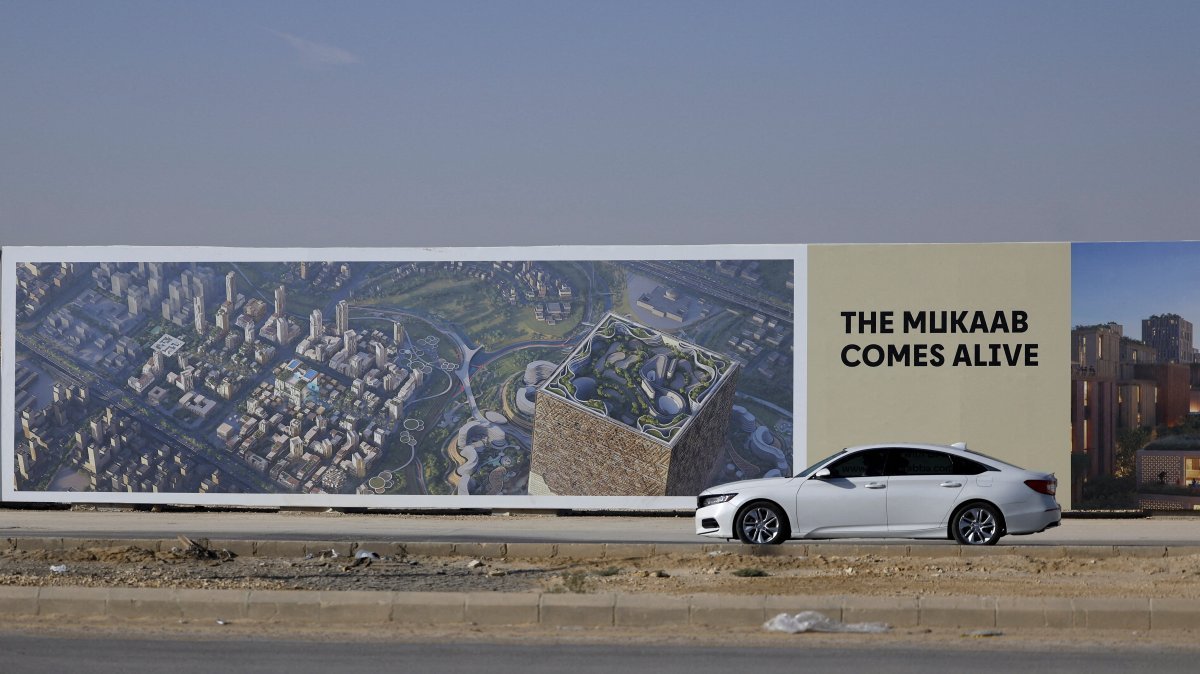
Problems have been seen with other giga-projects. In Riyadh, work has halted on Mukaab, a cuboid skyscraper 400 meters (1,300 feet) high and wide, an architect on the project told AFP.
“From the very start, this project was unrealistic. It was just a fantasy,” he said.
Neom has also pulled out of hosting the 2029 Asian Winter Games at Trojena, its under-construction ski resort, after reported problems in building it.
However, RSG said it was in “strong operational and commercial shape”. The company hired more than 3,000 people in 2025, including over 900 in the last four months of the year, it said.

